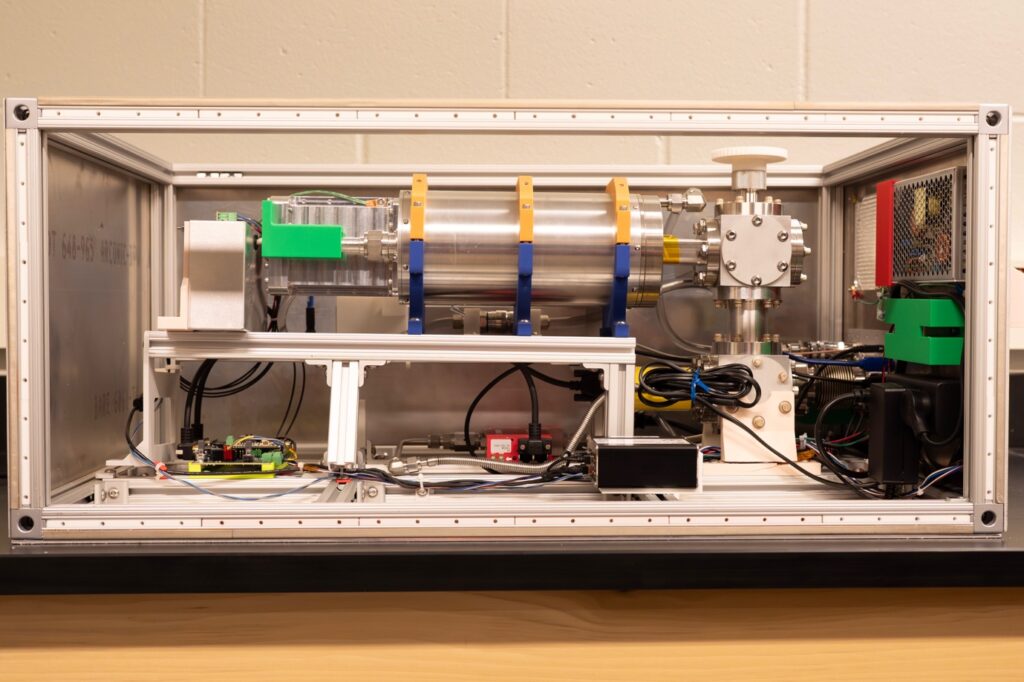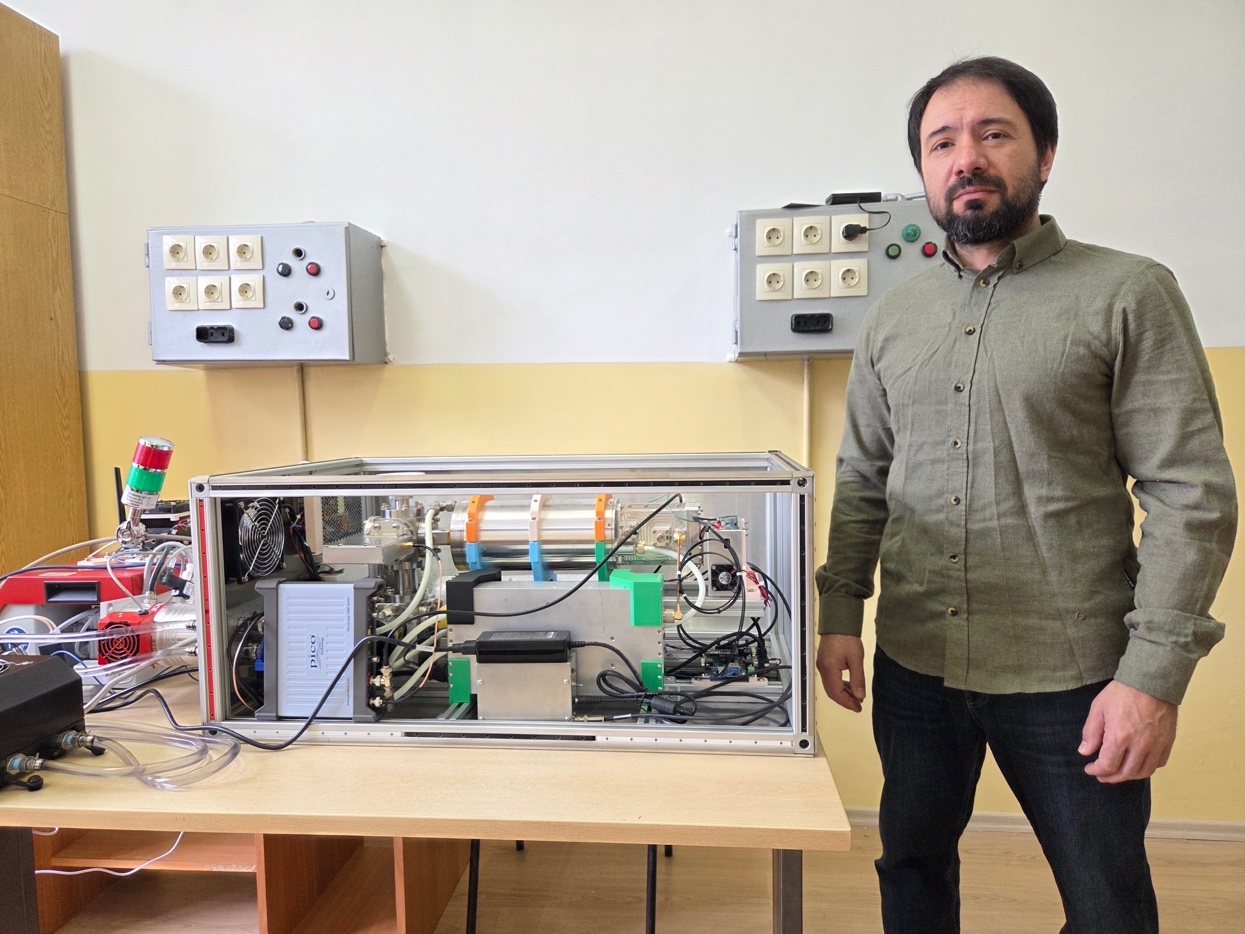
- Alpha Ring’s Alpha-E device installed permanently at Bulgaria’s Sofia University
- The device enables launch of a brand-new experimental fusion physics curriculum
- A student has already used the device to complete a thesis
- Follows first installation of an Alpha-E globally at Purdue University earlier this month
Sofia, Bulgaria – Alpha Ring, the global leader in micro-fusion technology, has permanently installed its Alpha-E tabletop fusion device at Sofia University, marking a major milestone in the expansion of global access to hands-on fusion education. This is the first time fusion experiments have been available in a classroom in Europe.
The installation supports the launch of a new undergraduate course, Introduction to Nuclear Fusion Systems, within the University’s Department of Radiophysics and Electronics. Built around the Alpha-E device, which is being donated to Sofia University by alumnus Dr. Kosta Yanev, the course gives students direct experience generating and diagnosing fusion reactions, allowing students to move beyond theory and into practical fusion experimentation for the first time.
Through 15 structured modules, students are to receive training in high-voltage systems, microwave plasma generation, ion beam formation, vacuum engineering, fusion reaction diagnostics, and cross-section measurements, culminating in direct observation and analysis of fusion products.
Peter Liu, Co-Chairman of Alpha Ring, said:
“Fusion is moving from a long-term scientific ambition to a rapidly developing global industry. If we are serious about commercializing fusion, we must expand access to real, hands-on experimentation. Seeing Alpha-E move from pilot programs to full curriculum integration and supporting thesis-level research in Europe is powerful evidence that demand is growing. We are helping universities train the next generation of fusion scientists and engineers by putting real fusion devices directly into their labs.”
From pilot program to thesis-level research
The permanent deployment formalizes a Memorandum of Understanding signed between Alpha Ring and Sofia University two years ago. Since last April’s Fusion Future Conference in Sofia, the University has been trialling the Alpha-E device, integrating it into its Physical Electronics curriculum and enabling students to conduct laboratory-based plasma and fusion experiments.
Most notably, a bachelor’s student has successfully used the Alpha-E device to complete a thesis titled “Measurement of Radiation in a Plasma Setup for Thermonuclear Fusion Research.” The project demonstrated deuterium-deuterium (D-D) fusion using the Alpha-E’s Electron Cyclotron Resonance (ECR) plasma source, with neutron detection confirmed via both internal detectors and an independent external system. The results validate the device’s capability as a working neutron source and a robust platform for university-level fusion research.
Associate Professor Stiliyan Lishev, Head of the Sofia University Radiophysics and Electronics Department, said:
“Developing a highly qualified workforce and stimulating innovation in a competitive industrial ecosystem is one of the cornerstones needed to establish fusion as a sustainable energy source of the future. In this regard, partnerships between universities and the private sector are essential for the training and education of scientists, engineers and technicians with the relevant expertise. The partnership between the Faculty of Physics of Sofia University and Alpha Ring is truly an example of such productive cooperation.”
Expanding plasma physics experimentation
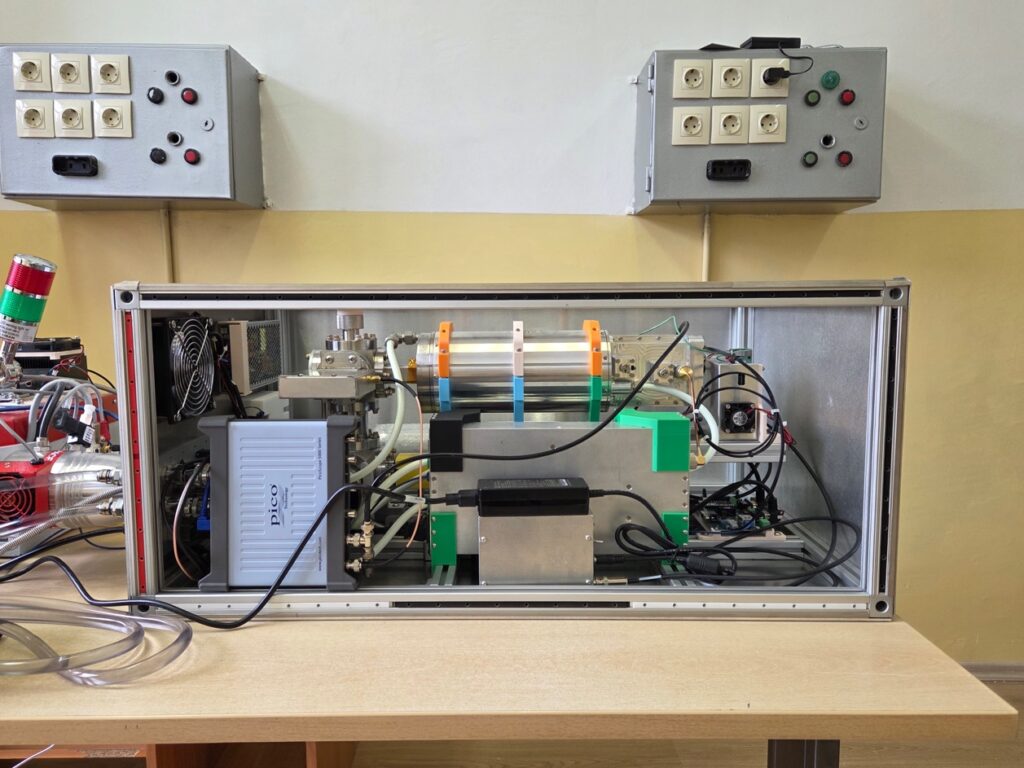
To further broaden the educational experience, Sofia University will also integrate Alpha Ring’s newly developed Plasma Module, an add-on to the Alpha-E device that enables hands-on plasma physics experimentation. The compact module allows students to visualize plasma formation and confinement, explore the effects of magnetic fields and microwave tuning, and use diagnostic tools such as Langmuir probes and optical spectrometers. By ionizing different gases and observing their unique emission spectra, students gain an intuitive and visual understanding of plasma behavior, which is an essential foundation for fusion science.
The Plasma Module expands the Alpha-E device’s capability from particle detection and fusion diagnostics into broader plasma physics education, a critical cornerstone of fusion physics. The combined system can operate as a standalone plasma source or integrate into larger experimental setups, giving institutions flexibility in how they structure laboratory teaching.
Assoc. Prof. Lishev added:
“The successful integration of the Alpha-E system into courses from the bachelor’s and master’s programs of the Faculty of Physics has shown that it is a valuable platform not only in terms of modernizing education in plasma physics and nuclear fusion, but also adds significant value to the practical training of students in the field of cutting-edge technologies. In addition, the Alpha-E system provides an opportunity for bachelor’s and master’s theses, for doctoral students to conduct relevant research, and for the scientific community in the faculty to expand its range of interests.”
Building the talent pipeline for fusion commercialization
This installation follows Alpha-E’s first permanent installation at Purdue University earlier this month and reflects Alpha Ring’s broader strategy for 2026: scaling its global footprint, embedding fusion devices into academic programs, and building a distributed talent pipeline to support the commercialization of fusion energy.